11/06/2026 Case study
Building climate resilience with sugarcane farmers
#Ethical Supply Chain#Sustainable Agriculture
11/06/2026 Case study
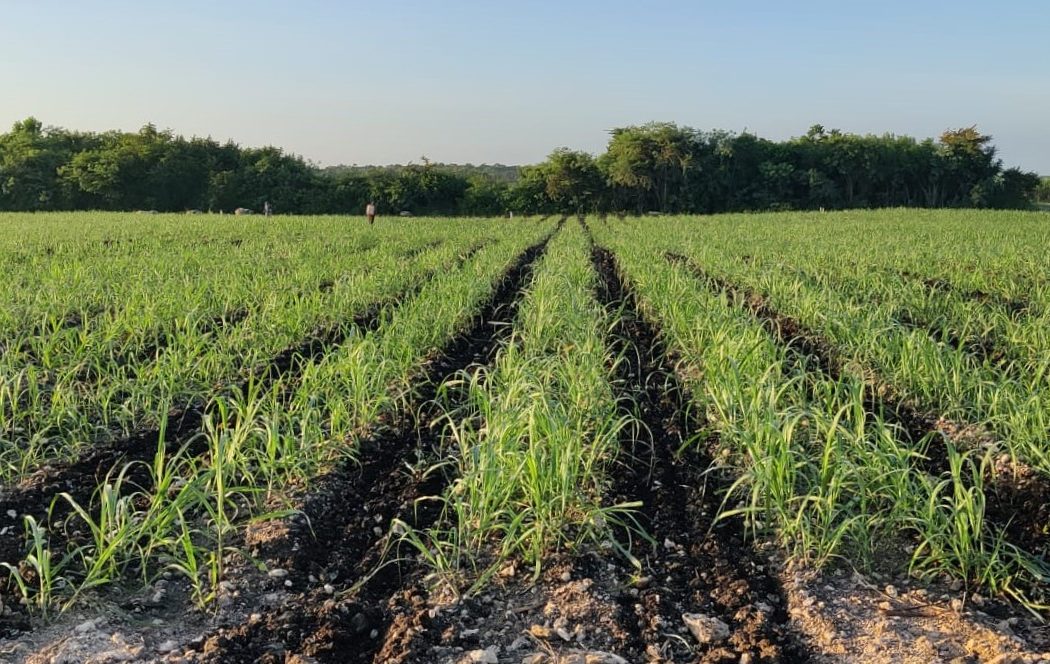
With support from Fairtrade International, farmers are putting practical solutions in place to adapt to the climate crisis. Sugarcane farmers are already facing more extreme and unpredictable weather, from storms and flooding to drought and unseasonable rain. These changes put crops, incomes and communities at risk.
Building on their carbon and water footprint studies launched in 2019, Fairtrade’s Sugar Climate Action Programme turns these insights into action, supporting local projects across Belize, Eswatini and Fiji.
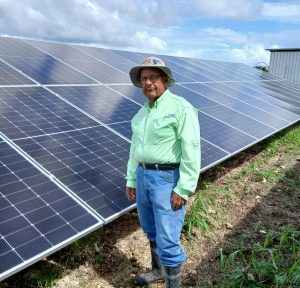 Traditionally, in Belize and Eswatini, farmers have relied on rainfall to irrigate their cane. Recently, farmers are facing longer dry periods and more erratic rainfall which is affecting their crops.
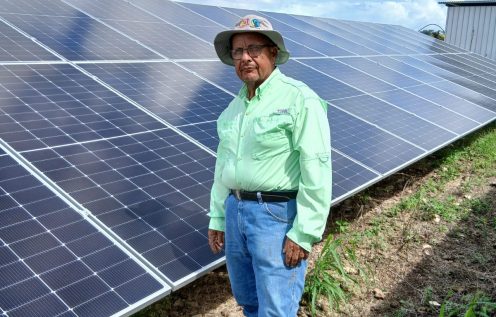
This is why sugarcane farmers are trialling solar-powered drip irrigation, which delivers water from wells, during dry periods, directly to plant roots. Drip irrigation minimises runoff and evaporation, and also avoids the costs and emissions linked to energy use. Early trials in Belize aim to reduce water use and improve crop growth.
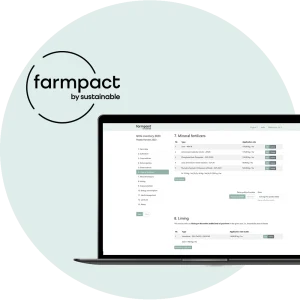 Farmers are also strengthening how they track their environmental impact. With training from consultancy Sustainable AG and the Fairtrade producer network for Latin America and the Caribbean (CLAC), sugarcane producers are using Farmpact, a digital platform that collects data directly from farmers to calculate field-level carbon footprints and enable monitoring over time.
This helps farmers and buyers understand emissions over time and identify practical ways to reduce them.
One of the most effective ways to reduce carbon emissions can be achieved by improving soil health. This is because soil can sequester carbon, meaning that carbon is locked up in the soil and is not released into the atmosphere. At the same time, the soil is one of the most important factors in improving productivity, so that the same amount of energy produces more crops. In other words, each tonne of sugar cane would have a lower carbon impact. There is a lot of work being done to understand how this can be done effectively in our suppliers’ farms.
In Fiji, farmers are using agricultural lime to reduce soil acidity. If soil is too acidic, it often holds onto more water, creating damp conditions. This damages the roots of sugarcane and means they are less able to take in essential nutrients, affecting growth.
Early trials using agricultural lime show improved soil conditions, stronger plant growth and higher germination rates. Many farmers in the pilot are now applying lime more widely as a cost-effective way to improve yields.
In flood-prone areas of Fiji, restoring drainage has been a priority. In 2023, the Lautoka Cane Producers Association helped clear and repair drainage channels.
As a result, waterlogging is reported to have reduced by up to 75%, improving access to fields and supporting better crop establishment. Farmers also report broader benefits, including more reliable incomes and improved farming conditions.
 As one of Fairtrade’s earliest supporters, we’re proud that Fairtrade International is supporting small-scale sugarcane farmers to adapt to the climate crisis. Since 2021, €458,000 has been funded by Fairtrade Internationally in the Sugar Climate Action Programme, alongside Fairtrade Premium funding and industry support.
These projects are still developing, but they show how practical, local solutions can help strengthen both environmental sustainability and the long-term resilience of farming communities.